
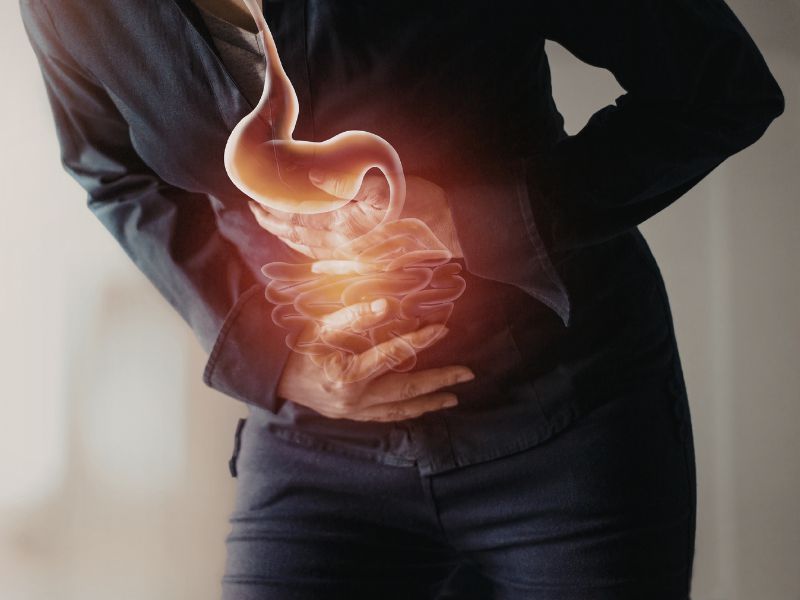
When discussing digestive health, the conversation usually revolves around what we eat—macronutrients, probiotics, and fiber. However, there is a crucial mechanical aspect of digestion that is often overlooked: gut motility.
Gut motility refers to the stretching and contracting of the smooth muscles in the gastrointestinal (GI) tract. This coordinated wave-like movement, known as peristalsis, is responsible for pushing food, liquids, and eventually waste through your system.
When you are fasting or sleeping, your gut relies on the Migrating Motor Complex (MMC), essentially the “street sweeper” of the digestive tract, to clear out residual food and bacteria. When motility is sluggish, uncoordinated, or the MMC fails to activate properly, it leads to a host of uncomfortable effects.
Here are four major signs that your gut motility is compromised, along with the science-backed botanical tools to get things moving naturally.
1. Early Satiety and the “Brick in the Stomach”
If you feel uncomfortably full after eating only a small portion, or if it feels like your meal is sitting heavily in your stomach for hours, you may be experiencing delayed gastric emptying. When the stomach muscles are sluggish, food ferments in the upper GI tract instead of moving efficiently into the small intestine. This is a primary motility issue.
The Botanical Fix: Natural “prokinetics” are substances that gently stimulate the emptying of the stomach without acting as harsh, habit-forming laxatives.
What to look for: Clinical research has shown that 14 days of supplementation with Artichoke and Ginger extracts significantly reduced nausea, pain, fullness, and bloating (1). This is because the Ginger helps to increase the gut motility while artichoke extract supports bile flow to promote digestion (1).
Targeted Support: Research Verified Gas & Bloating utilizes a potent 320 mg of Artichoke (standardized to 2.5% Cynarin) alongside Ginger Root to act as a natural prokinetic, encouraging the stomach to empty at a healthy, comfortable pace. These star ingredients are backed up with stomach soothing Turmeric, Peppermint to help relax the gastrointestinal tract, Caraway to fight gas formation, and more. You can learn more about the product here.
2. Excessive Trapped Gas and Distention
Gas is a normal byproduct of bacterial fermentation in the gut. However, when small intestine motility is slow, food lingers and ferments for too long, creating an overabundance of gas. If the intestinal muscles aren’t contracting effectively to push that gas out, it becomes trapped, leading to painful distention.
The Botanical Fix: Carminative herbs contain oils that help relax the smooth muscle of the gut, allowing trapped air to dissipate and pass through the system.
What to look for: Some of the most recommended carminative herbs are Fennel Seed, Peppermint, Roman Chamomile, and Caraway. These botanicals have been studied for relieve the physical tension trapping the gas and soothing the digestive process (2,3,4,5).
Targeted Support: You will find precise, potent doses of all these carminative herbs in Research Verified Gas & Bloating, which is specifically formulated to soothe the intestinal walls and alleviate upper GI pressure. As mentioned above, these ingredients are joined by Ginger and Artichoke as well as the powerful anti-inflammatory herb, Turmeric.
3. The Constipation-Diarrhea Pendulum
Poor motility does not solely mean a slow gut; it can also manifest as erratic, uncoordinated contractions. This is the hallmark of Irritable Bowel Syndrome (IBS). The nervous system of the gut may spasm, pushing contents through too rapidly (resulting in diarrhea), only to exhaust itself and halt movement entirely (resulting in constipation).
- The Botanical Fix: When the gut’s rhythm is confused, it requires a motility modulator rather than a stimulant.
- What to look for: Psyllium Husk is a highly soluble fiber that acts as the ultimate regulator (6). If motility is too slow, it adds soft bulk to the stool, gently stretching the intestinal walls to trigger a peristaltic wave. If motility is too fast, Psyllium absorbs excess water in the colon, slowing transit time down to a normal pace. Psyllium also positively impacts the gut bacterial balance and reduces inflammation in the gut, to improve daily comfort (6).
- Targeted Support: Research Verified IBS Relief delivers a substantial 600 mg of Psyllium alongside calming botanicals like Perilla and Aloe Vera to regulate erratic bowel habits and soothe an irritated intestinal lining, plus digestive enzymes to help with digesting food to prevent the excess fermentation that leads to gas.
4. The “False Alarm” and the Feeling of Incomplete Emptying
Perhaps the most frustrating motility issue is tenesmus—the persistent sensation that you need to pass a stool even when your bowels are empty. This is often a “communication error” between your gut nerves and your brain.
While tenesmus can stem from various sources, there are two primary reasons for this “false alarm”: Undigested Residue and Muscular Tension. When enzymes are low, undigested food residue ferments in the lower tract. This creates gas pressure and irritation that “tricks” your nerves into signaling for a bowel movement that isn’t actually there. Other times, the issue is mechanical; if the “exit” muscles of the pelvic floor are too tight or fail to relax, they create a physical obstruction that leads to a feeling of being “backed up” even after you’ve gone.
- The Botanical Fix: While pelvic floor issues often require physical therapy, you can significantly reduce the “sensory noise” in your gut by ensuring food is fully metabolized before it reaches the exit.
- What to look for: A high-activity, multi-strain Digestive Enzyme complex. Enzymes like Amylase (for carbs), Protease (for protein), and Lipase (for fats) act as the “scissors” of the gut (7). By breaking food into microscopic pieces, they help prevent the irritation and residue that leads to spasms and sluggish transit.
- Targeted Support: Research Verified IBS Relief features the DigestX™ Enzyme Complex, a 350 mg blend designed to handle the “heavy lifting” of digestion. This reduces the burden on your intestinal muscles, allowing them to focus on moving waste out smoothly rather than struggling with undigested bulk.
The Bottom Line
Gut motility is a complex mechanical process. It relies on a delicate balance of muscle contractions and nerve signals to move food through your system. When this rhythm is disrupted, you may feel the heavy “brick” of slow emptying or the “false alarms” of an uncoordinated gut. By identifying your specific symptoms, you can choose the right botanical tools to help. You might use prokinetics like Ginger and Artichoke to jumpstart a slow stomach or Psyllium and Digestive Enzymes to calm and regulate an overactive system.
Because persistent digestive issues can sometimes signal underlying medical conditions, we always recommend consulting with a healthcare professional before starting any new supplement routine. True digestive health requires addressing the mechanical “how” of your system and a qualified gastroenterologist can help you understand your individual digestive function. If your doctor approves, pairing science-backed formulas like Research Verified Gas & Bloating or IBS Relief with healthy habits, can provide your gut with the support it needs to function with ease once again.


Comments are closed.