
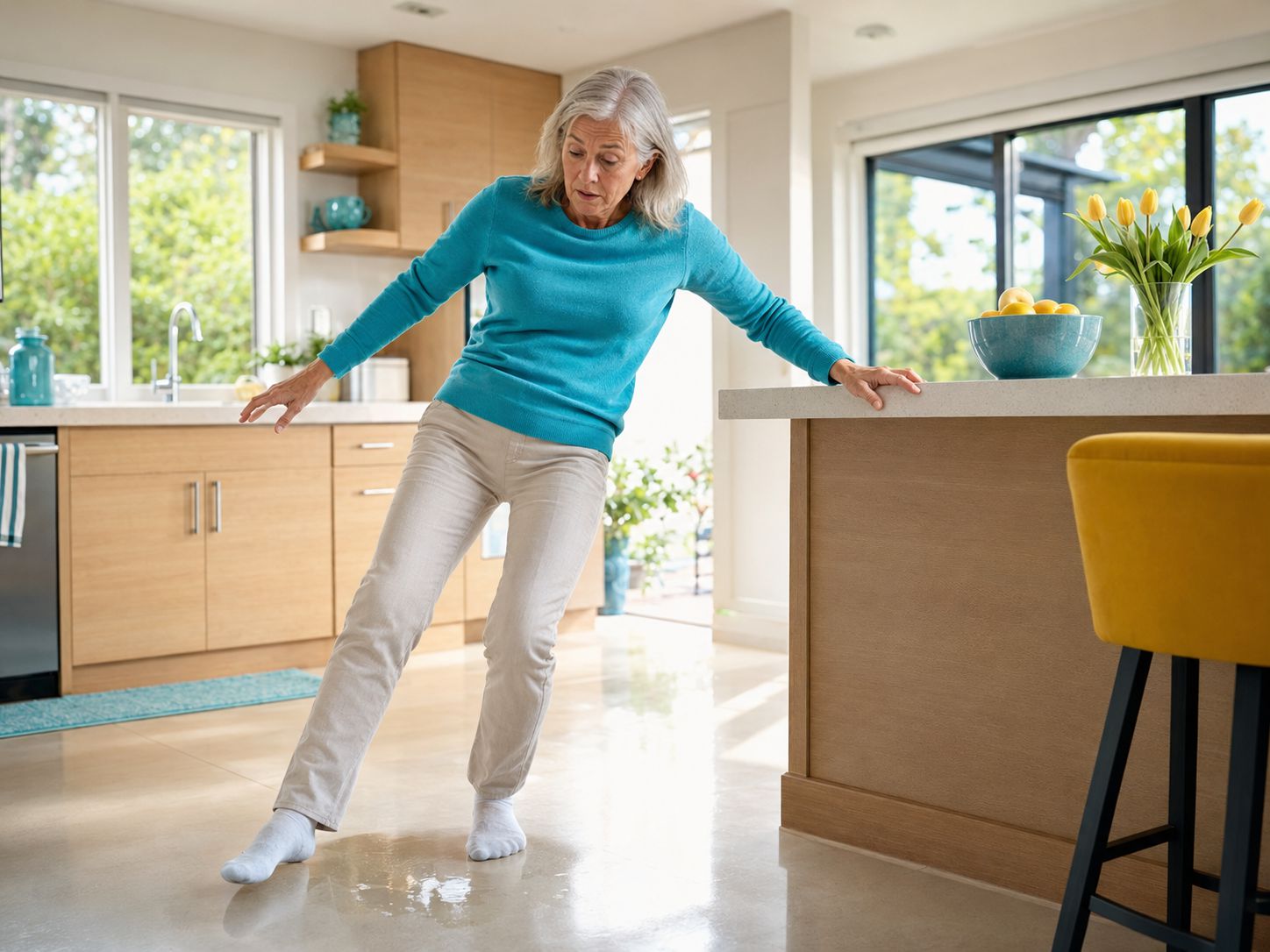
Falls become more common as we get older. Changes in balance, muscle strength, vision, reaction time, and medication use can all affect how steady you feel. However, falling is not an unavoidable part of aging. Many risk factors can be addressed through exercise, home safety, regular health checks, and simple changes to your daily routine.
A fall rarely has just one cause. Several small changes may occur at the same time. You might lose strength in your legs, have difficulty seeing obstacles, or feel less confident on uneven ground. After a near fall, fear may also cause you to move less. This can weaken the muscles you depend on for balance.
The goal is not to become overly cautious. It is to identify what you can improve so you can keep moving confidently.
1. Build Strength and Practice Balance
Strong muscles help you stand, climb stairs, correct your balance, and react when you stumble. Exercise programs can reduce falls among older adults, especially when they include activities that challenge both strength and balance (1).
Helpful exercises include:
- Standing up from a sturdy chair
- Heel raises while holding a counter
- Resistance-band exercises
- Shifting your weight from side to side
- Walking heel to toe
Tai chi can also be a gentle way to improve balance, coordination, and controlled movement. Always keep a sturdy surface nearby when trying a new balance exercise.
Your muscles also need enough protein to maintain and repair tissue. Inadequate protein intake has been associated with sarcopenia, which is the age-related loss of muscle mass, strength, and physical function (2). Try to include protein with each meal through foods such as eggs, fish, poultry, yogurt, beans, lentils, tofu, nuts, or seeds.
Start at a level that feels manageable. A physical therapist or qualified trainer can help if you have limited mobility, osteoporosis, significant pain, or a history of falling.
2. Do Not Ignore Joint Stiffness
When your knees, hips, ankles, or feet feel stiff, you may shorten your steps or move differently to avoid discomfort. This can make it harder to lift your feet properly or respond quickly to an obstacle. Regular movement can help keep the joints and surrounding muscles active. In this case, movement doesn’t have to mean a gym class, it can be as simple as a short morning walk, gentle ankle circles, seated knee extensions, and light mobility exercises that help your body feel less restricted.
Nutrition can be included as part of this broader routine. For example, turmeric is a natural spice that has anti-inflammatory properties that can improve joint comfort, collagen is a type of protein that can improve joint comfort because it supports cartilage structure and reduces inflammation, and Research Verified Joint Relief contains a variety of ingredients selected to support joint comfort, flexibility, and mobility.
These products do not replace strength and balance training, but they can provide additional nutritional support for people working to stay active and comfortable.
3. Check Your Vision and Hearing
You rely on your eyes to judge distances, notice changes in the ground, and identify obstacles. Problems with depth perception or difficulty seeing in low light can make stairs, curbs, and unfamiliar spaces harder to navigate.
Have your vision checked regularly and keep your prescription up to date. If you wear bifocals or progressive lenses, take extra care on stairs because the lower part of the lens can affect how clearly you see the ground.
Nutrition can also support long-term eye health. Research Verified Eye Health provides nutrients selected to support healthy vision and normal eye function as part of a broader wellness routine. It is not a substitute for regular eye exams or corrective lenses, but it can offer additional nutritional support.
Hearing also helps you stay aware of what is happening around you. Discuss noticeable changes with a healthcare professional rather than assuming they are simply part of aging.
4. Review Your Medications
Some prescription and over-the-counter medications can cause dizziness, sleepiness, confusion, low blood pressure, or slower reactions. These effects may become more noticeable when several medications are taken together.
Medication management is one of the steps recommended by the National Council on Aging for reducing fall risk (3). Ask your doctor or pharmacist to review everything you take, including sleep aids, allergy medications, pain relievers, and supplements. Do not stop a prescribed medication on your own. A professional can check for interactions, adjust the timing, or recommend a different option.
Feeling lightheaded when you stand can also happen when your blood pressure drops suddenly. Dehydration, illness, and certain medications may make this more likely. After lying down, sit on the edge of the bed for a moment before standing. When getting up from a chair, rise slowly and make sure you feel steady before walking.
Frequent dizziness, fainting, or sudden weakness should not be ignored. Speak with a healthcare professional if you experience this so the cause can be investigated.
5. Make Your Home and Footwear Safer
Many falls happen in familiar places. Loose rugs, electrical cords, dark hallways, wet floors, and clutter can easily become hazards.
Remove objects from walking paths, secure or remove loose rugs, and keep cords close to walls. Add brighter lighting to stairs and hallways. In the bathroom, consider nonslip mats, grab bars, or a stable shower seat. Stairways should have secure handrails and clearly visible edges.
Footwear matters too. Loose slippers, smooth soles, worn-out shoes, and backless sandals can make it easier to slip or catch your foot. Choose shoes that fit securely and provide good traction. Avoid walking in socks on smooth floors.
Foot pain, numbness, swelling, or changes in foot shape can also affect the way you walk. Speak with a healthcare professional or podiatrist if foot problems are making you feel unsteady.
These changes are not a sign that you are losing independence. They are a practical way to protect it.
Honorable Mention: Support Your Bones
Preventing the fall is the first goal, but bone health matters because stronger bones may be less vulnerable to serious injury if a fall does happen. Weight-bearing movement, resistance exercise, adequate protein, and appropriate intake of nutrients such as calcium and vitamin D all contribute to a bone-supportive lifestyle. Your healthcare provider can also help determine whether you should have your bone density checked.
>>> Learn about how Research Verified Bone Health Support promotes bone density and strength, the smart way.
The Bottom Line
Reducing your risk of falling is not about giving up activities or moving through life nervously. It is about developing the strength, balance, awareness, and confidence needed to continue doing the things you enjoy.
Start with the changes that feel most realistic. Add a few strength exercises, clear a cluttered walkway, schedule an eye exam, or ask your pharmacist to review your medications.
Nutrition and supplements can support your muscles, joints, bones, and vision, but they work best alongside regular exercise, a balanced diet, appropriate medical care, and a safe environment.
Support a lifetime of mobility and independence with healthy habits and Research Verified.


Comments are closed.