
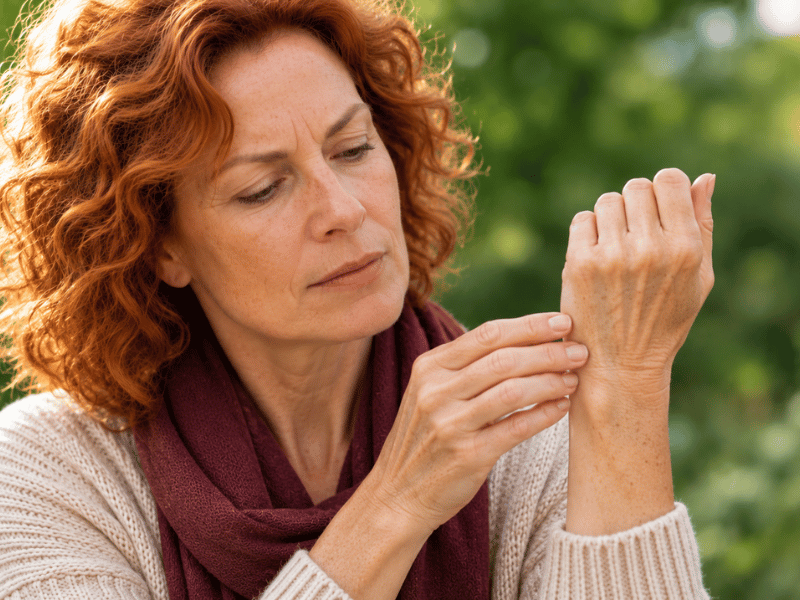
Have you noticed that the veins on the back of your hands seem more visible than they used to? Perhaps your skin bruises more easily, tears after a minor bump, or has developed a thin, almost papery texture. These changes can be surprising, especially when you haven’t done anything differently. So why does skin become more delicate as we get older?
The answer lies in changes happening beneath the surface. As we age, our skin gradually loses some of the structural support, cushioning, and moisture that help keep it strong and resilient. While some of these changes are inevitable, others are influenced by factors we can control.
What’s Happening Beneath the Surface?
Your skin consists of several layers that work together to protect your body. The outermost layer, called the epidermis, acts as a protective barrier. Beneath it, the dermis contains blood vessels, nerves, and proteins that give skin its strength and flexibility. A layer of fatty tissue provides additional cushioning.
As we age, these structures gradually change. According to the National Library of Medicine, the epidermis becomes thinner, connective tissues lose strength and elasticity, and the fatty layer beneath the skin may shrink.
Together, these changes help explain why aging skin can appear almost translucent, particularly on the hands and forearms. With less cushioning, blood vessels become more visible, and even minor injuries can leave noticeable marks.
The Loss of Collagen and Elastin
Two proteins play particularly important roles in maintaining healthy skin: collagen and elastin.
Collagen provides strength and structure, helping skin remain firm and resistant to damage. Elastin gives skin the flexibility to stretch and return to its original shape.
As we age, collagen production slows, existing fibers change, and the skin’s supporting network gradually weakens. Changes in elastin also make it harder for skin to regain its shape after stretching.
These changes don’t happen overnight. They develop over decades, contributing to wrinkles, reduced firmness, and increased fragility. And collagen loss isn’t simply cosmetic. Because collagen supports connective tissues, including those surrounding blood vessels, changes in these structures can make skin more vulnerable to bruising and tearing.
Why Sun Exposure Makes Skin Thinning Worse
Although aging naturally affects collagen and elastin, years of sun exposure can accelerate the damage. Ultraviolet radiation damages structural components within the skin and interferes with normal repair processes. Over time, this contributes to wrinkles, uneven pigmentation, reduced elasticity, and increased fragility.
Interestingly, sun-damaged skin doesn’t always become thinner. Some areas may develop a thickened, leathery appearance even as the deeper supporting structures weaken. Signs of long-term sun damage are often most noticeable on frequently exposed areas, including the face, neck, hands, and forearms. are especially noticeable on frequently exposed areas, including the face, neck, hands, and forearms. The American Academy of Dermatology identifies sun exposure as a major contributor to premature skin aging.
Hormonal Changes Can Affect Skin Thickness, Too
For women, menopause can introduce another influencing factor. Estrogen helps maintain collagen production, moisture retention, and elasticity. But during menopause when estrogen levels decline, some women notice that their skin becomes drier, less firm, and more delicate.
Of course, men experience skin aging too. Genetics, sun exposure, smoking, nutrition, and certain medical conditions can all influence how quickly these changes develop.
Why Thinner Skin Bruises and Tears More Easily
As the skin loses its protective structure and cushioning, small blood vessels become more vulnerable to damage. Even a minor bump may cause blood to leak into surrounding tissues, leaving a visible bruise.
In older adults, these changes can contribute to actinic purpura, a condition that causes purple patches on sun-exposed areas such as the hands and forearms. Aging can also slow parts of the skin’s natural repair process, meaning cuts and tears may take longer to recover.
However, unusually fragile skin shouldn’t automatically be attributed to age. Certain medications, including long-term corticosteroids, and medical conditions can also contribute to thinning. Sudden or severe changes, unexplained bleeding, or wounds that aren’t healing should be evaluated by a healthcare professional.
Can You Prevent Your Skin From Becoming Thinner?
We can’t completely prevent age-related changes, but several everyday habits can help protect skin and limit additional damage.
- Protect your skin from the sun. Use broad-spectrum sunscreen with SPF 30 or higher, wear protective clothing, and avoid unnecessary UV exposure. These habits remain important even when signs of aging are already visible.
- Moisturize regularly. A good moisturizer helps maintain the skin’s protective barrier and reduce moisture loss. Ingredients such as glycerin, ceramides, and hyaluronic acid can be especially helpful for dry, aging skin. However, moisturizers cannot restore lost underlying tissue.
- Support your skin through nutrition. Your body needs adequate protein for tissue maintenance and repair, along with nutrients such as vitamin C, which is essential for normal collagen production. A balanced diet provides the building blocks needed to maintain healthy skin.
For people interested in additional nutritional support, collagen supplements are another option worth understanding.
Can Collagen Supplements Support Aging Skin?
Since collagen plays such an important role in maintaining skin’s strength and elasticity, it makes sense to consider whether increasing your collagen intake could help support your skin as you age.
When you consume hydrolyzed collagen, your digestive system breaks it down into smaller peptides and amino acids that your body can absorb. These provide building blocks that can be used throughout the body, including for connective tissue maintenance.
And researchers have found some encouraging results.
A 2023 systematic review and meta-analysis examining 26 randomized controlled trials involving 1,721 participants found that hydrolyzed collagen supplementation was associated with significant improvements in skin hydration and elasticity compared with a placebo.
More recently, a 2026 meta-analysis also reported improvements in hydration and elasticity, with some benefits becoming more apparent after several weeks of supplementation.
Although findings differ between studies and more high-quality research is needed, these results suggest that collagen peptides may offer benefits for certain aspects of skin health. However, improving hydration and elasticity isn’t the same as restoring skin thickness.
Supporting Your Skin With Research Verified Collagen Powder
If you’re looking to give your body an additional source of collagen-derived amino acids, Research Verified® Collagen Powder makes it simple.
Each serving provides 8,000 mg of hydrolyzed marine collagen peptides sourced from wild Alaskan pollock. Hydrolyzed collagen is broken down into smaller peptides that can be digested and absorbed, providing amino acids your body can use for normal tissue maintenance.
And because the powder is unflavored, it’s easy to add to your morning coffee, smoothie, or favorite beverage without making major changes to your routine. You can even bake it into some of your favorite recipes.
Combined with sun protection, regular moisturizing, and a balanced diet, Research Verified Collagen Powder can be a convenient addition to a skin-focused nutritional routine.
The Bottom Line
Skin thinning is a natural part of aging, but its effects extend beyond appearance. As skin loses collagen, elastin, and protective cushioning, it becomes more fragile and prone to injury. Although we can’t stop these changes entirely, consistent sun protection, moisturizing, adequate nutrition, and gentle skincare can help maintain healthier skin as we age.
The goal isn’t necessarily to make your skin look the way it did decades ago. It’s to help it remain comfortable, resilient, and well cared for.
Healthy skin starts with good daily habits, and nutrition is part of that foundation. With 8,000 mg of hydrolyzed marine collagen per serving, Research Verified Collagen Powder makes it easy to add collagen peptides to your routine.
Explore Research Verified Collagen Powder →
- Aging Changes in Skin. MedlinePlus Medical Encyclopedia, U.S. National Library of Medicine.
- Healthy Skin. National Institutes of Health.
- 11 Ways to Reduce Premature Skin Aging. American Academy of Dermatology.
- Effects of Collagen Supplements on Skin Aging: A Systematic Review and Meta-Analysis of Randomized Controlled Trials. The American Journal of Medicine, 2025.
- Effects of Oral Collagen for Skin Anti-Aging: A Systematic Review and Meta-Analysis. Nutrients, 2023.
- Oral Collagen Peptides and Skin Rejuvenation: A Systematic Review and an Updated Meta-Analysis of Randomized Controlled Trials. Journal of Cosmetic Dermatology, 2026.


Comments are closed.